SME Warehouses: Why a Progressive Automation Strategy Is the Best Approach
Summary of the article
SMEs and mid-sized companies can now automate and modernize their logistics operations in a gradual and cost-effective way. This article explores the current challenges facing the industry, the key levers for controlling costs through retrofitting, and the essential steps to ensure a successful project. From intelligent supervision to targeted mechanization, discover how to improve productivity, reduce errors, and optimize workflows without excessive investment. You will also find common pitfalls to avoid and the key criteria for selecting the right intralogistics integrator.
Table of Contents
-
-
- The Intralogistics Market: What Challenges Do SMEs and Mid-Sized Companies Face?
- Costs, Processes, and Fast ROI: How to Calculate Your Project?
- Methods for Implementing Progressive Automation
- Tangible Benefits: What Can You Expect from Modernization?
- The 4 Over-Engineering Pitfalls You Must Avoid
- Checklist: How to Choose Your Intralogistics Integrator
- Why Transitic Is the Ideal Partner for SMEs and Mid-Sized Companies
-
For a long time, intralogistics automation was associated with large distribution centers handling massive volumes. The cost of equipment, project complexity, and the need for standardized workflows led many to believe that such solutions were beyond the reach of SMEs and mid-sized businesses.
That reality has changed. Today, companies of all sizes are modernizing their logistics operations. It is often the only way to manage an increasing number of SKUs, meet responsiveness requirements, address labor shortages, and improve productivity. The challenge is not to replicate the models used by large corporations, but to deploy solutions tailored to specific workflows, constraints, and growth objectives.
The success of a project relies above all on a progressive approach tailored to the actual needs of the business. This practical guide presents the key strategies to implement a profitable, scalable automation adapted to SMEs and mid-market companies.
01. The Intralogistics Market: What Challenges Do SMEs and Mid-Sized Companies Face?
The industrial and logistics landscape is evolving at an unprecedented pace. According to recent studies, the global warehouse automation market is expected to exceed $40 billion by 2030, with annual growth of more than 10%. France is among the most dynamic European markets, and SMEs now account for a significant share of new projects.
On the ground, supply chain managers in SMEs face very practical challenges:
The temptation is often to copy the platforms of major intralogistics players. However, small and medium-sized businesses require agility, responsiveness, and the ability to evolve their facilities without disrupting day-to-day operations.
02. Costs, Processes, and Fast ROI: How to Calculate Your Project?
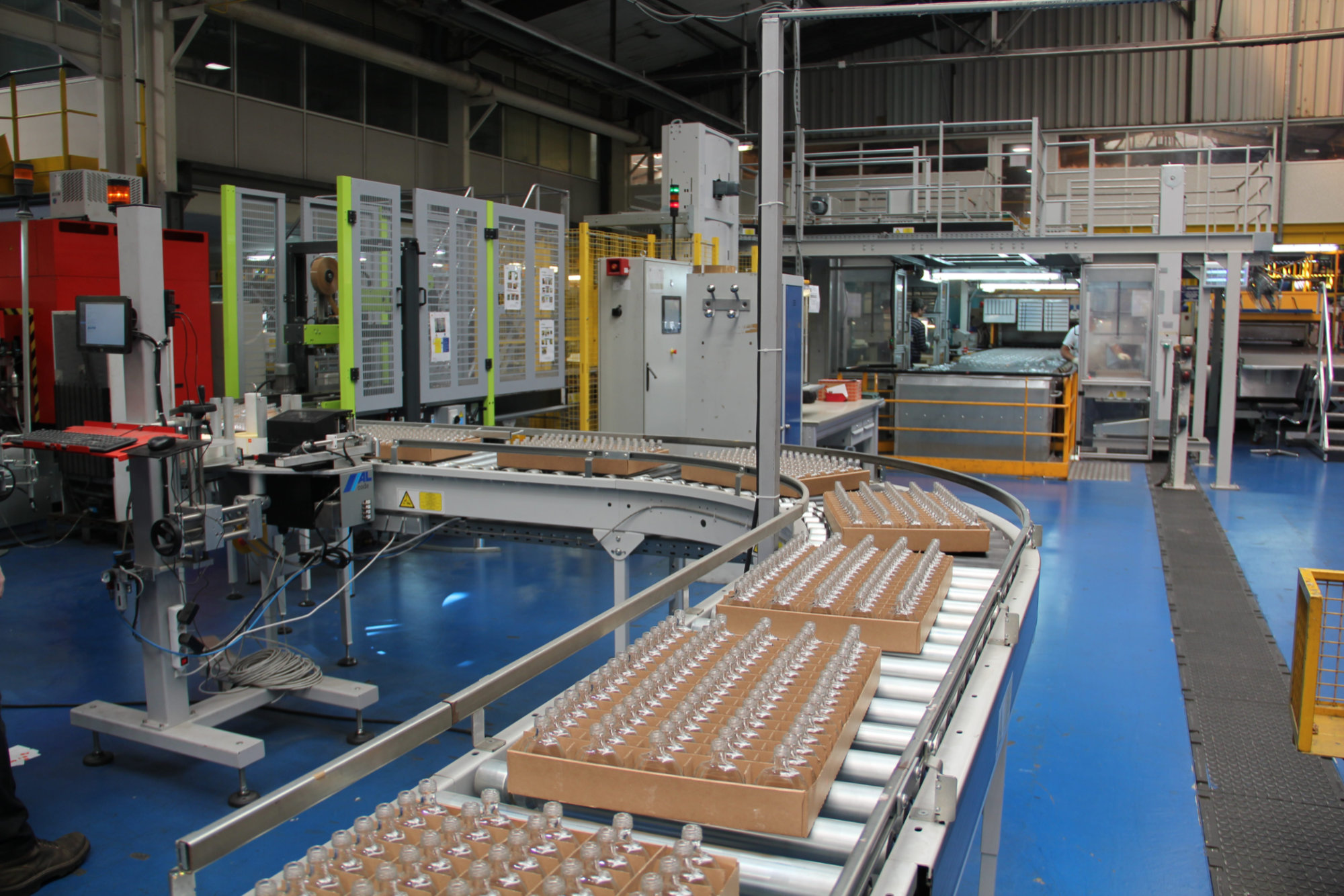
The primary concern for financial departments remains the initial investment required. For a logistics project to be viable within an SME or mid-sized company, achieving a measurable return on investment within 18 to 36 months is essential. To reach this profitability target without dramatically increasing capital expenditure (CAPEX), companies must analyze and leverage existing assets. This is where industrial conveyor refurbishment and warehouse retrofitting strategies become highly relevant.
By retaining steel mechanical structures while integrating IoT sensors, new PLCs, and modern API connections, businesses can significantly reduce their initial investment.
The impact on processes is twofold:
CAPEX Savings
Investment is focused on intelligence, connectivity, and precision rather than mechanical infrastructure.
Business Continuity
A retrofit project can be carried out in successive phases, avoiding a complete warehouse shutdown.
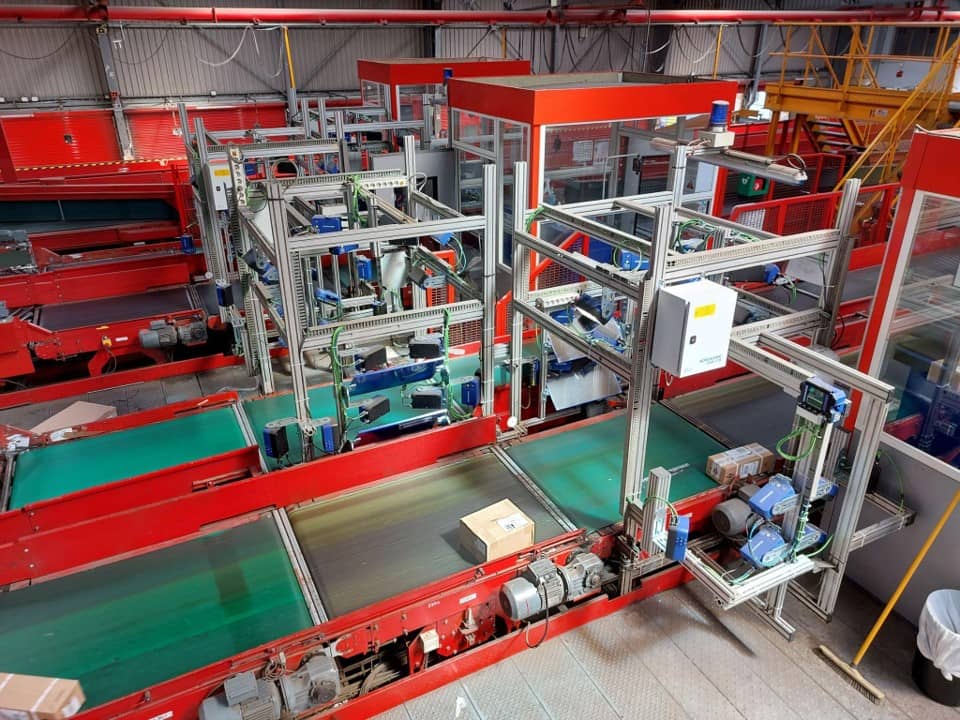
This is the approach adopted by Transitic’s teams at GEODIS, where IT systems and automation controls were retrofitted without any interruption to operations. By prioritizing the modernization of existing installations instead of a complete replacement, GEODIS reduced investment costs by approximately 70% compared to a fully new solution.
03. Methods for Implementing Progressive Automation
Automation should not be viewed as a fixed project but as an evolving process that adapts to changing business needs. This approach is built on three complementary and interdependent pillars: IT/Data management, automated systems, and Lifetime Services.

Step 1: Modernize and sustain existing assets
This is at the heart of industrial responsibility. The process includes upgrading obsolete electrical cabinets, replacing energy-intensive motors, and implementing predictive maintenance strategies. Through connected sensors and advanced algorithms, the system can anticipate component failures before they disrupt picking operations.
Step 2: Implement intelligent monitoring
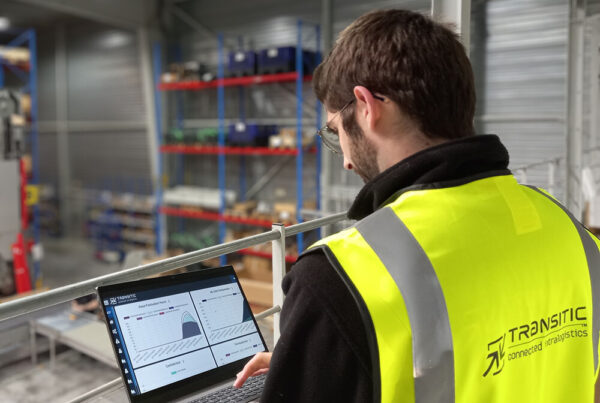
Before adding machines, existing workflows must be orchestrated. Deploying a vendor-agnostic Warehouse Control System (WCS) enables centralized warehouse management regardless of the brand or age of existing equipment. This provides real-time visibility of warehouse operations through a single interface, allowing bottlenecks to be identified immediately.
Step 3: Introduce targeted mechanization
Once software control and the mechanical foundation are secured, SMEs can introduce advanced technologies according to their specific needs, such as Goods-to-Person systems, robotic arms, or intelligent terminals. Automation can then evolve alongside the company’s growth, step by step, without unnecessary costs.
04. Tangible Benefits: What Can You Expect from Modernization?
Automation and logistics digitalization go far beyond technical improvements: they directly enhance business performance. Once systems are optimized and interconnected, benefits quickly become visible through key performance indicators (KPIs):
- Order Accuracy: Picking errors can be reduced by up to 80–90% thanks to automated controls and guided workflows.
- Overall Productivity: Productivity gains of 20% to 50% can be achieved at picking stations depending on the technologies deployed.
- Workplace Safety: Significant reductions in physical strain and accidents associated with heavy manual handling.
05. The 4 Over-Engineering Pitfalls You Must Avoid
When defining your project, remain cautious of purely theoretical approaches promoted by some providers or consulting firms. Here are four common pitfalls:
06. Checklist: How to Choose Your Intralogistics Integrator?
The success of your project depends directly on the partner you select. Before moving forward, verify the following criteria:
| Item to Verify | What It Means in Practice |
|---|---|
| Technological Independence | The integrator should be free to select the most suitable technologies available on the market (conveyors, terminals, motors, etc.) based on your actual operational requirements. |
| Software Agnosticism | The proposed Warehouse Control System (WCS) should seamlessly integrate with your existing ERP, WMS, and automation equipment through open APIs. |
| SME Culture & Proximity | SMEs need a responsive partner that can provide rapid on-site assistance when required and understands the realities of limited budgets and the need for operational flexibility. |
| Dual Expertise (Mechanical & IT) | Your partner should combine strong expertise in both heavy mechanical refurbishment and the development of logistics algorithms, control software, and supervision interfaces. |
07. Why Transitic Is the Ideal Partner for SMEs and Mid-Sized Companies
At Transitic, our approach is driven above all by hands-on field experience. Our philosophy is guided by an assumed industrial pragmatism: ‘Don’t replace what works. Connect it.’ As an independent intralogistics integrator, we build tailor-made solutions perfectly adapted to your economic realities:
European Design and Integration
With teams operating in France, Germany, and Spain, we provide maximum responsiveness and local support through our Lifetime Services, ensuring preventive maintenance and continuous system improvement over time.
More Than 250 Successful Projects
Extensive experience gained alongside SMEs, mid-sized companies, and third-party logistics providers (3PLs) facing real operational challenges every day.
35 Years of Independence
More than three decades dedicated to designing, integrating, and optimizing logistics flows. We select the most effective technology for your business.
The Power of OpenWCS
Our software suite is developed in-house by our IT teams and is completely vendor-agnostic. It centralizes, supervises, and anticipates all your workflows through a single interface, optimizing productivity without requiring the replacement of existing installations.
Automating your warehouse should not feel like a leap into the unknown or a source of financial uncertainty. By adopting a progressive approach focused on leveraging existing assets and intelligently managing data, you can secure your operations while ensuring a fast and measurable return on investment.
Would you like to assess the efficiency of your current workflows or explore the feasibility of retrofitting your existing installations?
About the author – Cloé Moreel
Cloé Moreel has been a communications officer at Transitic since 2020. She regularly writes articles on intralogistics, supply chain, and emerging connected technologies.
Related Articles
#connectedintralogistics
France
96 Bd du Petit Quinquin
CRT 1 – 59812 Lesquin
Tél. : +33 (0)3 20 87 66 96
Germany
Am Scheid 1
57290 Neunkirchen
Tel : +49 2735 6588580
Spain
C/ Velazquez, N. 80 – 5 IZ
28001 Madrid
Tel : +34 673 234 296